CHI 2026 | AI Sparked More Ideas — Why Did 18 of 30 Students Converge on Similar Designs?
The AI group left 291 ideas versus 89 for sketching, yet image concepts still converged. This classroom study of 61 design students separates idea count, design intent, and creativity ratings.
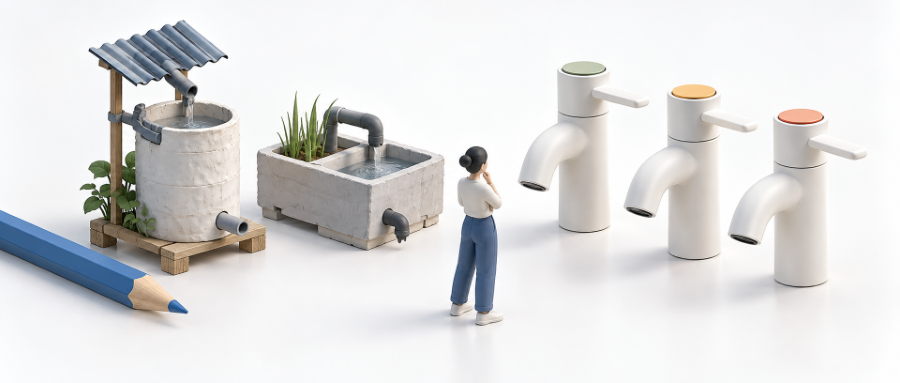
Green for low water use, yellow as a reminder, red as a warning. Fitting that ring of lights onto a faucet or showerhead looks like a solid water-saving design. In this classroom exercise, though, 18 of the 30 students using AI proposed something in that family. They were not collaborating on one assignment — each explored on their own.
More interesting still: AI did not only offer those options. Counting textual suggestions as well, the AI group left 291 ideas; the sketching group left 89. Choices clearly multiplied — yet on image concepts, many still moved toward similar directions. Offering more ideas and helping people explore different designs seem to be two different things.
This CHI 2026 paper tracked 61 industrial design undergraduates using sketching and AI. From that long list of suggestions, what did students keep, and what did they drop? Sketches and dialogue logs let us see those tradeoffs. As for which side — AI or sketching — is more creative, the study does not reach a firm conclusion.
01 Same brief, two different conditions
Participants were not absolute beginners: fifth-year industrial design students in their eighth semester, already trained in sketching, modeling, CAD, and materials/process. Four teaching groups were randomly assigned to two conditions: 31 used sketching, 30 used AI. Each person independently completed the same brief: how to make household occupants more conscious of saving water?
The brief did not specify a particular household, income level, or use setting. The whole activity lasted about an hour and a half — roughly one hour of making, the rest for briefing and recording. The sketching group could use only paper and pencil, no devices; the AI group could use their own computers or phones and freely choose large language models and text-to-image tools.
Figure 1 shows the study flow. Before the task there were questionnaires and an Alternative Uses Test; afterward sketches, annotations, AI dialogues, and images were collected, then experts scored and process analysis followed. An open brief let students define the problem themselves, but free tool choice also means the comparison is not only pen versus prompt — it includes the help and constraints each person could obtain.
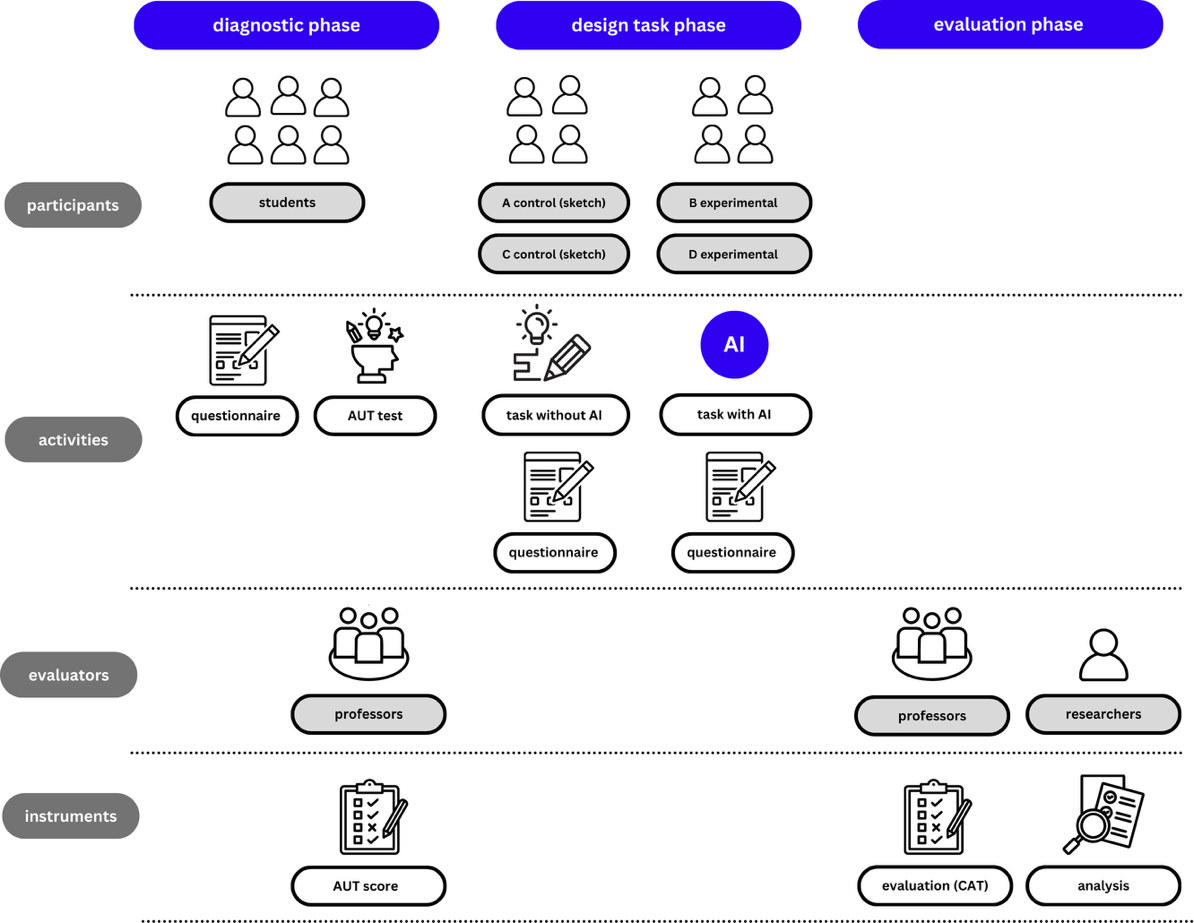
The study took place in April 2025. Some used free versions, some paid, and some switched tools after quotas ran out. The authors wanted to keep how students actually use AI; that makes the classroom more realistic, but it is not suitable for ranking a particular model, and it cannot stand in for the capability ceiling of all AI tools today.
02 More textual suggestions does not mean more image concepts
Split the two numbers first. At the all-ideas level — annotations, textual suggestions, sketches, and AI images — the sketching group had 89 and the AI group 291. But at the image-concept level, sketching had 71 and AI had 44. They answer different questions; one set alone cannot declare who is more creative.
One AI user obtained 41 text-level ideas. Such a list can provide starting points, but each item is not yet a design the student has worked through. Sketching students often thought and drew in parallel; AI students more often discussed in text first and only asked tools to generate images once a concept was clearer.
Figure 2 classifies all ideas by direction; larger circles mean more ideas in that class. Besides metering, flow restriction, and recycling, the AI group also showed advocacy, habit change, and gamification categories. The paper reports average categories per person at about 4.2 for AI and about 2 for sketching — a descriptive distribution from researcher coding.
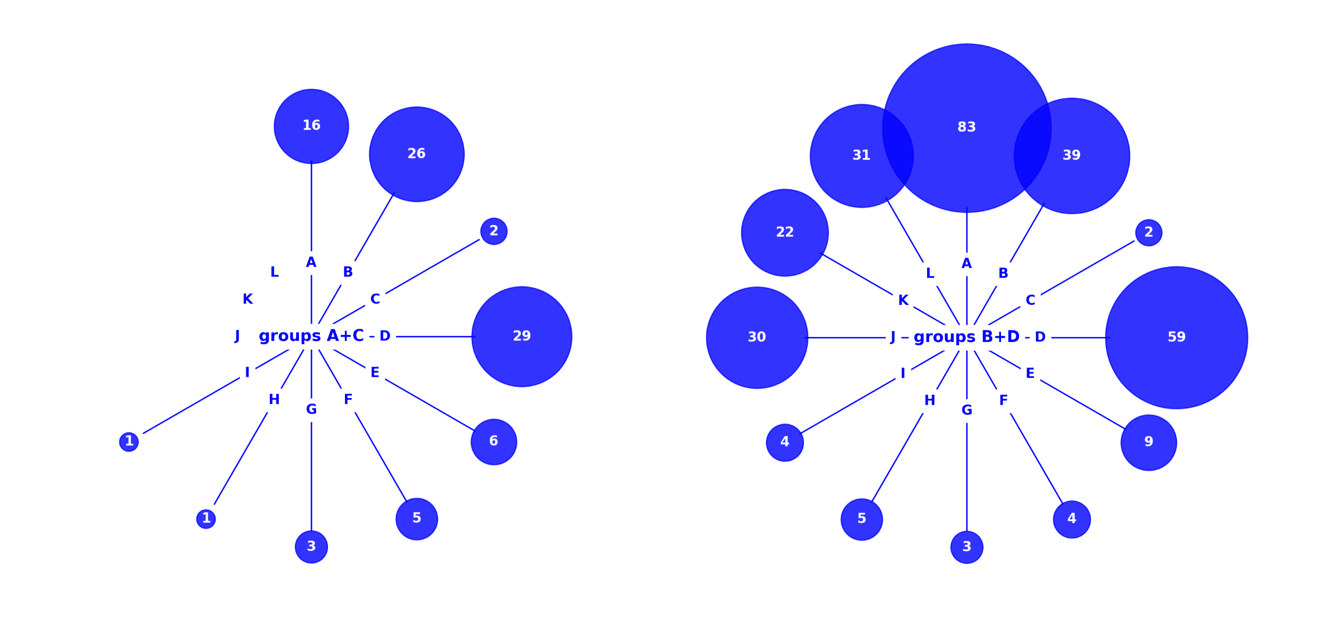
Fewer image concepts also have practical reasons. The authors observed that some students, worried about generation quotas, tended to leave image output for later; switching tools and preparing image prompts also costs time. Multiple AI variants of the same concept counted as one concept in scoring. So 44 versus 71 cannot be read as AI being inherently weak at visual exploration.
03 New directions appeared — students did not always follow them
Figure 3 shows the recurring light-cue schemes. In the AI group, 18 people proposed faucet or shower designs that used red–yellow–green colors for water use — 60% of that group. The paper also notes that AI images often looked technical and were set in relatively affluent environments. The similarity is not only matching colors — the way of solving the problem is close too.

Sketch work showed more adjustments aimed at everyday situations. Figure 4 excerpts the sketching portion of the original comparison figure: containers, connection methods, water-use logging, and use sequence. The authors especially note that some proposals centered on the tinaco — a water tank common in Mexican housing — emphasizing low cost and local experience.
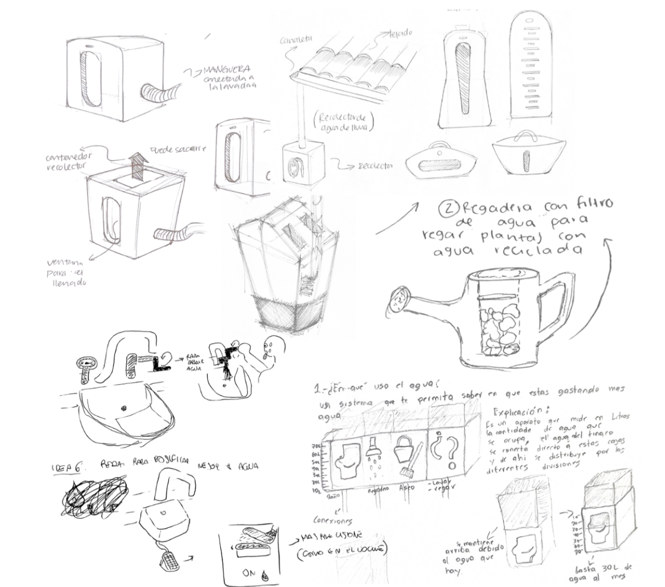
Rough sketches do not automatically mean deeper thinking. But AI already raised habit change, services, or education — why did most students not continue? One author guess is that students are used to designing makeable physical products, so they still tend to pick that kind of scheme. This study did not separately test that cause.
A tilt toward technical solutions may relate to prompts lacking context, model data bias, or students’ own choices. The paper does not disentangle these factors. I would not reduce the 60% to “AI makes people dumber.” Students already had more options; they still needed to judge which one was worth pursuing and how to carry it forward.
04 Sometimes students worked to make AI understand — not to clarify the problem
Figure 5 records some participants’ sequences of action between problem space and solution space. P means understanding the problem; S means proposing or refining a solution; symbols distinguish annotations, sketches, prompts, model replies, tool switches, and so on. The horizontal axis is order of actions or dialogue turns — not minutes spent — so it cannot compare whose thinking was faster.
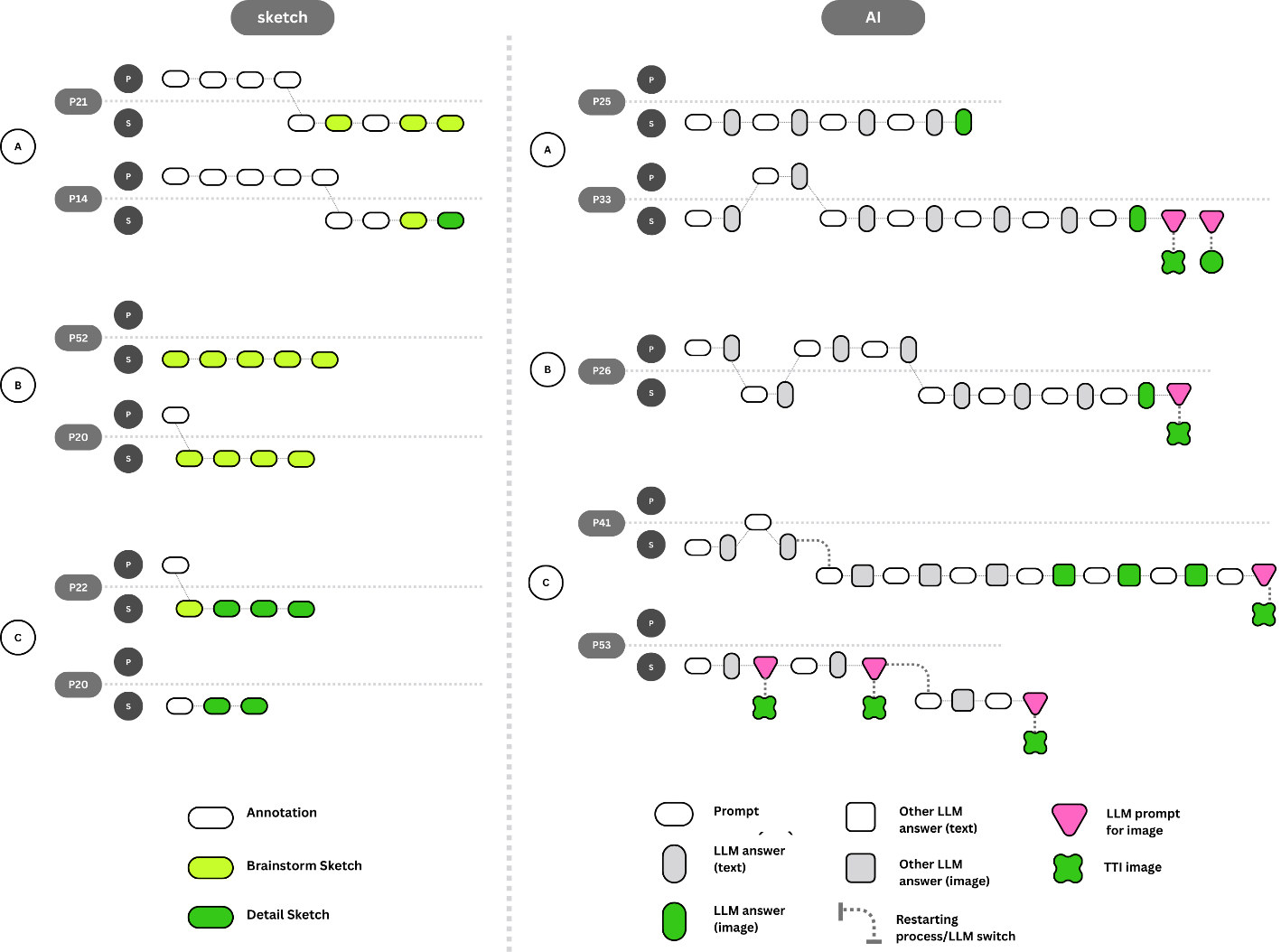
In the sketching group, annotations and sketches often show a continuous thread: list which activities use water, try several approaches, then add structure or use sequence. Some AI users also researched the problem first, but many quickly began requesting solutions. Of 30 people, 28 had a large language model generate prompts, then took them to a text-to-image tool.
That adds an extra paraphrase step. Students first explained to an LLM, then let it explain for them to the image tool. When results missed expectations, some repeated prompts, rejected technical schemes, or switched models and started over. Dialogue logs show that frustration, but logs alone cannot assert students were not thinking — only that some operations clearly centered on making the tool express intent accurately.
The authors also analyzed initial prompts, distinguishing direct requests for solutions, first understanding the problem, and requests for joint exploration. After excluding incomplete records, that analysis used 27 logs. The categories offer an observational entry; they do not prove which prompt style stably yields better design.
Continuing a dialogue is not necessarily continuing exploration. Changing a faucet to a certain color — is that a new design rationale, or did the last image simply fail to match? Both raise turn count, but a long chat log does not by itself show that a student fully explored the problem.
05 Average scores edged higher — that is not enough to declare AI the winner
Three design instructors with more than ten years’ experience scored image concepts plus explanatory text on a five-point creativity scale. Mean concept scores were 2.52 for sketching and 2.89 for AI. These are scores over 71 sketch concepts and 44 AI concepts — not one independent score per 61 students, and not a long-term creativity test.
Of two between-group comparisons the authors report, one found a difference and one did not; the overall conclusion is therefore left uncertain. Labels A, B, C, and D in the statistical report are also inconsistent with the earlier methods description. When reading significance results, that reporting issue cannot be skipped.
Scoring itself is not a fully objective ruler. Review criteria discussed included originality, usefulness, aesthetics, systems thinking, and context; final rating consistency ICC was 0.67, 95% CI 0.55–0.76. That helps understand how works were judged, but it is not enough to erase all effects of different presentation modes.
The same student can contribute multiple concepts; those works cannot simply be treated as coming from unrelated independent individuals. Summarizing concept scores as a creativity lift for students is, I think, more claim than evidence supports. Conversely, failing to confirm that AI is better does not prove AI is worse, or that sketching and AI are equivalent.
A broader limit: this is one school, one water-saving brief, and one short exercise. Students had no unified prompt training; tools and paid access varied; and the sketching group could not even search reference materials. It reveals phenomena worth noticing under these classroom conditions — it cannot answer whether long-term AI use harms creativity.
06 What classrooms should ask is why students kept this scheme
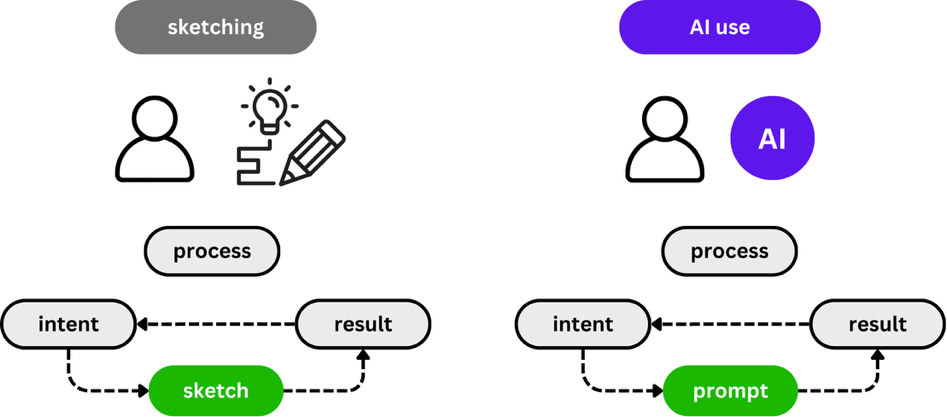
Figure 6 is the authors’ summary of two ways of working: sketching lets intent, sketch, and outcome repeatedly affect one another; the AI workflow adds a layer of prompts and model generation. It is an interpretive diagram from process analysis — not a direct measure of brain activity or cognitive load. We can use it to spot teaching issues without treating it as a confirmed psychological mechanism.
The authors recommend keeping basic design training and introducing AI more strategically. For this water-saving brief, I would first require students to write clearly for whom they design, what kind of housing they live in, and what cost and water-use habit constraints apply. Later, when choosing schemes, those conditions can judge options — without only asking what else the model can generate.
When turning in work, unselected directions can also be kept. After AI mentioned habit change or community service, why did students drop them? Task limits, implementation cost, or a default that industrial design must submit an object? Clarifying reasons does more to reveal judgment than collecting another polished render. That is a teaching idea extended from research observation — not yet validated.
Prompt-revision logs are also worth keeping, but with reasons: this time, re-understanding the problem, or only making the image look more like the prior idea? The former can be done with sketches, text, or AI; the latter has value too. Whether the record helps teachers tell those cases apart matters more than how long it is.
Which won — paper or AI — this paper does not settle. But a concrete classroom problem already appears: tools gave students directions they had not thought of, yet they may not know how to continue. When grading that color-changing faucet, beyond how pretty it looks, ask why the student decided this is what that household needs.
Paper informationOriginal title: Sketching vs. AI Prompt Based Design Intent Evolution in Undergraduate Students: an Exploratory Study. Authors Vanessa Sattele and Juan Carlos Ortiz, from the Industrial Design Research Center, National Autonomous University of Mexico (UNAM); Vanessa Sattele is also affiliated with the Faculty of Arts and Design at the same university. Published at CHI 2026; experiment conducted in April 2025. Paper link: https://doi.org/10.1145/3772318.3791350
Key termsDesign intent: in this paper, the creative direction that forms and adjusts around the task. Problem space and solution space: the former explores what to solve; the latter explores how. Total ideas versus image concepts: the former includes textual suggestions and annotations; the latter requires image plus explanation — not the same statistical unit. ICC: a measure of rater agreement, not a creativity score for the work.
ReferencesSattele, V., & Ortiz, J. C. (2026). Sketching vs. AI prompt based design intent evolution in undergraduate students: An exploratory study. In Proceedings of the 2026 CHI Conference on Human Factors in Computing Systems (CHI ’26) (pp. 1–14). Association for Computing Machinery. https://doi.org/10.1145/3772318.3791350