IJHCS 2026 | AI Interviews Catch Jailbreaks — and Can Misread Ambiguous Answers
A multi-agent AI interview system scored well on usability with 22 participants in a simulated study, yet its safety guard also mistook vague answers for violations. The hard problem in hiring AI is not asking more questions — it is avoiding false harm.

In an AI interview, a candidate who cannot clearly recount an experience may be treated as uncooperative — and the session may end. This is not hypothetical. In the MAIS study published in IJHCS, the safety guard automatically terminated 9 test interviews; after human review, only 4 were confirmed as truly unprofessional behavior.
Those numbers make it hard to treat AI hiring as a pure efficiency story. Recruitment is not customer-service triage: one wrongful block can mean a candidate loses the chance to explain, add detail, and be understood.
The paper's real contribution is not another chatty interview agent. It separates interviewing, monitoring, and evaluation — and surfaces the hardest cost in high-stakes pipelines: the more aggressively a system intervenes, the more it must prove it is not treating ordinary uncertainty as misconduct.
01 The hard part of hiring AI is not making the machine ask more questions
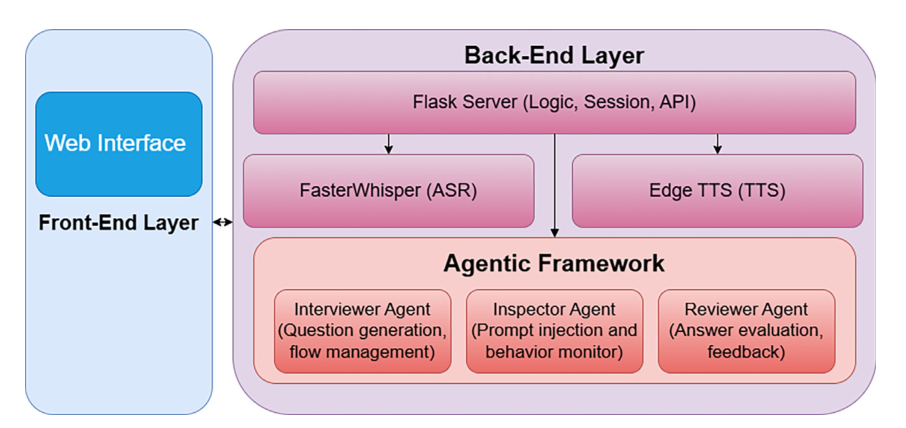
MAIS is a multi-agent system for semi-structured hiring interviews. Candidates can upload a résumé, choose a role, and answer in text or voice. The system supports multiple languages; speech is transcribed before backend processing. The authors aim to ease the time pressure of scaled hiring without turning interviews into opaque black boxes.
Responsibilities are not collapsed into one model. An Interview Agent follows up from résumé and role; an Inspector Agent looks for prompt injection, offensive content, and off-topic evasion; a Reviewer Agent scores answers for relevance, coherence, correctness, and completeness.
Each role owns a segment of the responsibility chain. That split makes the system easier to inspect, but it does not automatically make it fair. Every additional automatic judgment is another gate that can misclassify a candidate.
02 Answers are checked before the conversation continues
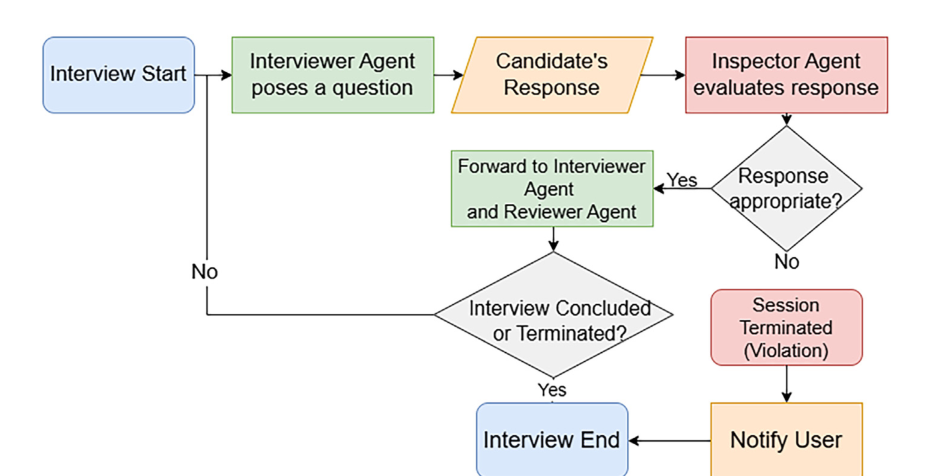
MAIS's flow is explicit: after a candidate answers, the Inspector judges suitability first. Only answers that pass are sent both to the Interview Agent to continue the dialogue and to the Reviewer for quality assessment. If an answer is flagged as a violation, the system ends the session and notifies the user. Three consecutive off-topic or evasive turns also trigger termination.
This design puts safety ahead of conversation. It can block direct prompt injection — for example, instructions to ignore previous rules. In hiring, however, interception rules must still distinguish malicious manipulation from nervousness, vague expression, and thin experience. Later results show that line is harder to draw than a flowchart suggests.
03 Feeling usable is not the same as being ready to hire with
The authors ran a two-part user study with 22 participants, all undergraduate or graduate students from different disciplines. Twenty completed simulated interviews in Italian; two others tried Romanian and Lithuanian. Participants chose from preset roles and could upload their own résumé or use a provided one.
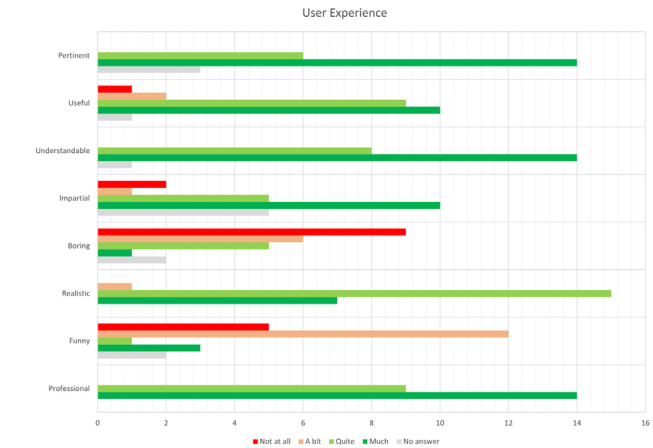
In the Italian group's experience questionnaire, participants generally rated the system as professional, understandable, useful, and relevant; ratings of realism were more mixed. The authors link that to the simulation: roles may not match careers participants care about, and résumés may not be their own.
This uneven but mostly positive experience can show that, in one simulated interaction, users felt they were facing a usable interview interface. It cannot show that the system selects better people, or that different groups would be treated the same.
04 Low discomfort is a starting point for candidate experience, not the end
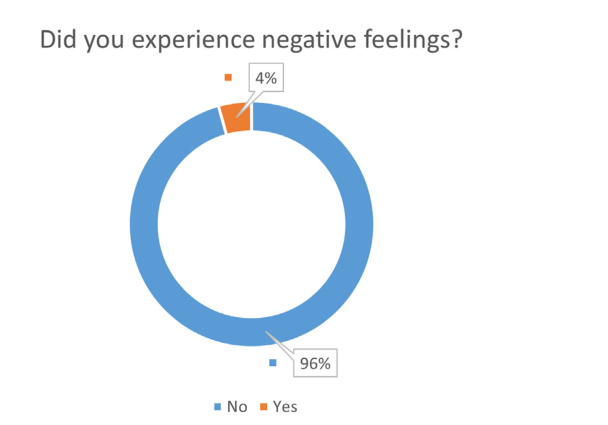
Among the 20 Italian participants, only one reported a negative feeling — that the system's knowledge follow-ups were too specific. A 96% / 4% split looks reassuring, but the sample is small, and this was a simulated interview, not a candidate facing a real job and real consequences.
Open feedback matters more. Some people valued neutrality and consistency; others wanted warmer answers and more explanation. The study therefore does not treat low discomfort as the finish line. It treats empathy and explainability as part of trust in automated interviewing.
For hiring products, candidates need more than an interface that does not offend them. They also need to know why the system asks what it asks, how their answers are handled, and whether they can pause, exit, and request deletion when they feel uneasy.
05 An SUS score of 81 cannot hide an over-strict guard
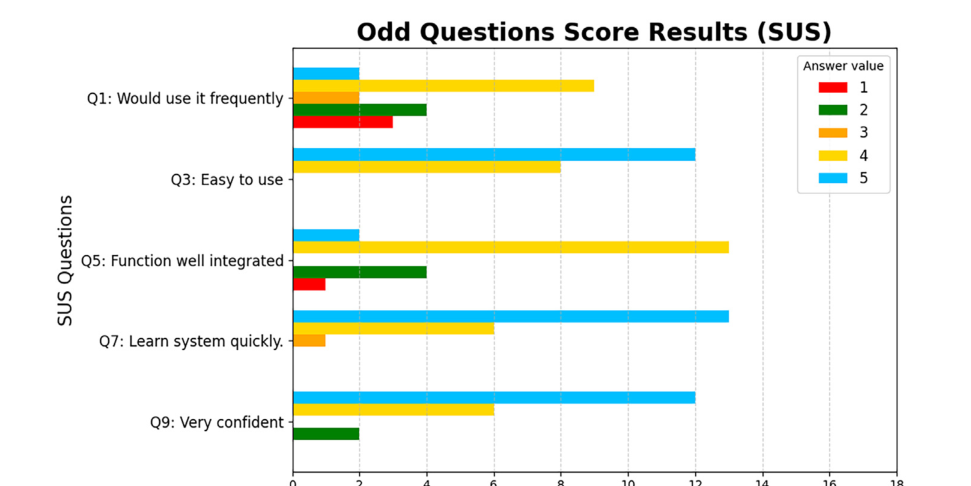
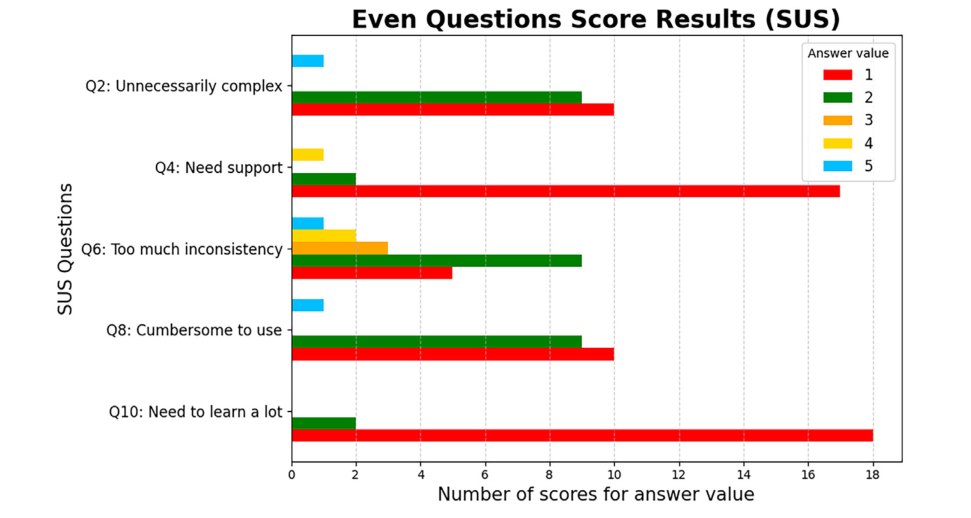
The 20 Italian participants averaged an SUS score of 81 — excellent by common interpretation. Items on ease of use and learning cost performed well: participants found the system easy to use, easy to learn, and felt reasonably confident using it.
The same logs show another side. The system recorded 0.4 confirmed violations per session on average; because the experiment explicitly encouraged participants to challenge the safety mechanism, nearly half triggered the guard. What matters is not trigger count, but human review: 9 interviews were auto-terminated, and only 4 were confirmed to contain truly unprofessional behavior.
High usability is not reliable procedural judgment. In a high-stakes personnel process, wrongful termination is not ordinary product friction; it is a false positive that can reshape opportunity. The authors also acknowledge that current thresholds are conservative and can treat low-information or ambiguous answers as potential violations.
06 Responsible AI interviewing should keep room for appeal and human judgment
The authors built in informed consent, the ability to pause or end an interview, data-deletion requests, interaction logs, and feedback channels. They also state clearly that MAIS does not independently rank or select candidates; final decisions remain with people. That boundary matters more than letting a model emit a total score.
Three practical principles follow. First, safety guards must allow review and correction, not chase interception rates alone. Second, candidates should be able to see the process they face, not only receive an outcome. Third, before real hiring deployment, systems need tests with real roles, real résumés, and broader populations for false harm and differential impact — not simulated experience scores treated as fairness audits.
MAIS's contribution is to write these problems into the architecture: interview, inspection, and evaluation are separated, and the system does not make hiring decisions alone. The paper does not complete a real bias audit, nor compare hiring quality with human recruiters or other systems. It shows a design direction worth further testing — not a pass that can replace human judgment in hiring.
Paper
MAIS: Exploring human-AI interaction in fair and transparent recruitment with a multi-agent LLM-based system
International Journal of Human-Computer Studies 215, 2026, 103859. Davide Piras, Alberto Pes, Diego Reforgiato Recupero, Giuseppe Scarpi.
DOI: https://doi.org/10.1016/j.ijhcs.2026.103859
Evidence boundary
The user study includes only 22 undergraduate and graduate students. Core quantitative results come mainly from 20 Italian participants using simulated roles and optional preset résumés. The paper reports usability, subjective experience, and test logs — not actual hiring outcomes, long-term candidate response, or causal evidence of group fairness.
Self-check
System composition, sample, SUS, auto-termination and human-review counts, candidate protections, and study limits were checked against the source article. This post separates the authors' design goals, participant perceptions, and hiring fairness claims that remain unverified.